Ether.fi: Powering Decentralized Staking and Liquid Finance on Ethereum :-
Ether.fi is a decentralized finance platform built on the Ethereum blockchain that reimagines how users stake, earn, and use their Ethereum (ETH) and other digital assets. Launched in 2023, it has quickly grown into one of the largest liquid restaking protocols by total value locked (TVL), attracting billions of dollars in assets and wide integration across the broader DeFi landscape.
A New Era of Staking: Non-Custodial and Liquid :-
At its core, ether.fi enables users to stake ETH — or other supported crypto like BTC or stablecoins — while retaining control of their private keys. Unlike traditional centralized staking services where an intermediary holds custody of your locked ETH, ether.fi is non-custodial: users interact with smart contracts directly and maintain ownership of their keys.
When a user stakes ETH on the platform, they receive a liquid staking token — commonly known as eETH or weETH — which represents their staked assets plus rewards. These tokens can be traded, deployed in other DeFi strategies, or used as collateral — preserving liquidity instead of locking up assets for long periods.
Multiple Streams of Rewards :-
Ether.fi staking model is built for maximizing returns through three primary reward streams:
1. Ethereum Consensus Rewards – When ETH is staked, users earn standard staking rewards for helping secure the network.
2. Restaking Yields – Ether.fi integrates with restaking services like EigenLayer, allowing staked ETH to earn additional rewards by supporting security for other protocols. This adds a potential second layer of yield on top of staking.
3. DeFi Yield Opportunities – Since eETH and related tokens are liquid and tradable, users can deploy them across DeFi — in lending platforms, liquidity pools, or automated yield strategies — compounding earnings further.
This approach aims to make capital more efficient, giving stakers the best of both worlds: security and composability.
Products Beyond Staking :-
While staking and restaking are central, ether.fi has expanded its offering:
. Liquid Vaults automate yield strategies: users deposit assets and a vault balances them across vetted DeFi protocols, auto-compounding returns with minimal intervention.
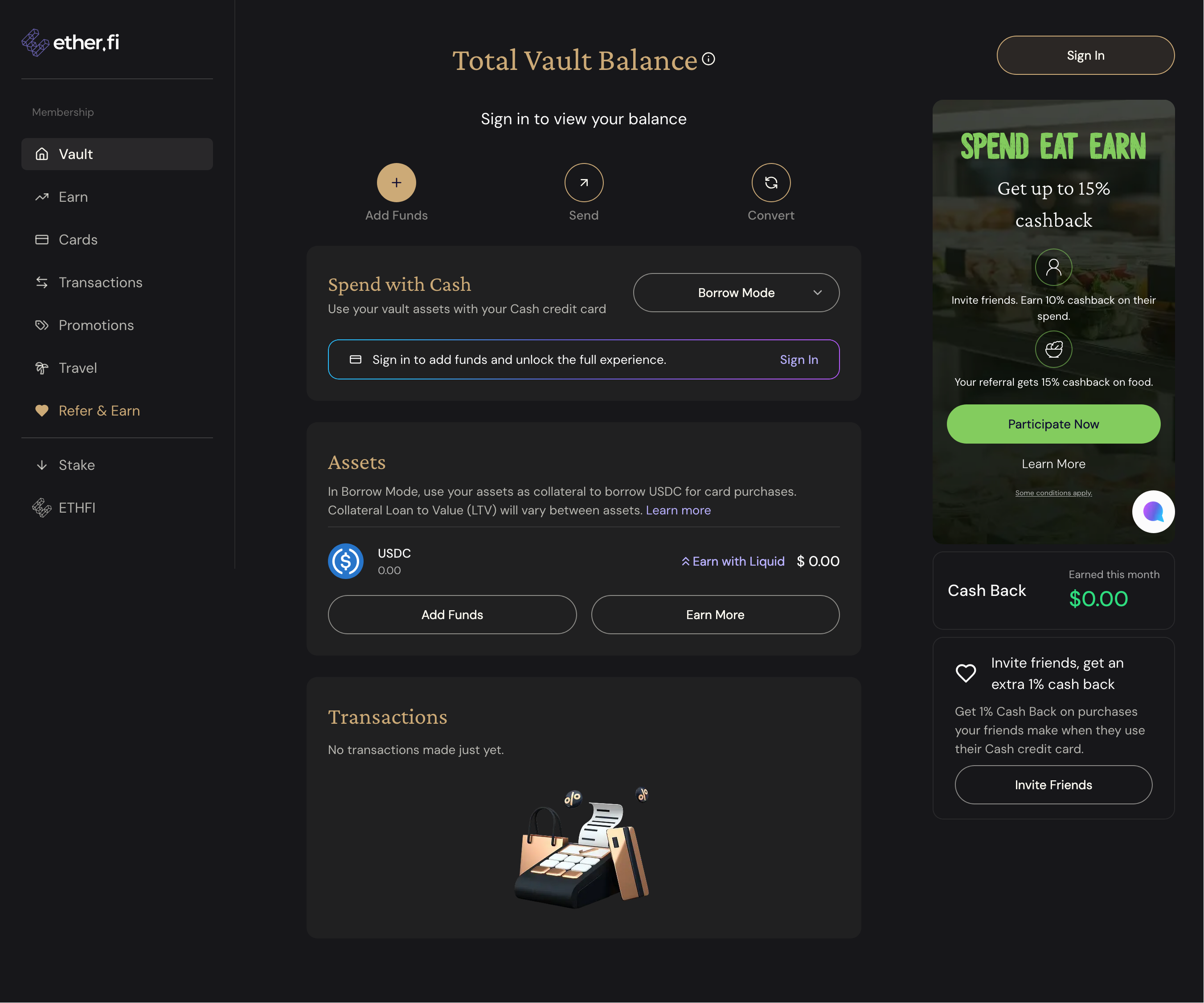
. Crypto-Backed Credit Card: A unique product in DeFi, this card connects to ether.fi wallets and lets users spend crypto with cashback and loyalty rewards at millions of merchants worldwide.
. Institutional Solutions: Tailored products help enterprises and institutions stake assets with deep liquidity and on-chain transparency.
These efforts position ether.fi not just as a staking service but as a broader on-chain financial ecosystem.
Governance and Tokenomics :-
Ether.fi governance revolves around its native token, ETHFI, which enables holders to participate in protocol decisions, such as staking strategies, treasury management, and upgrades — an essential feature of decentralized governance.
The project also uses revenue-sharing mechanisms: protocol fees can be used to buy back and burn ETHFI, or distribute rewards to stakers, aligning incentives between users and the protocol’s long-term success.
Security, Decentralization, and Risks :-
Ether.fi architecture focuses on decentralization and security:
. User-Controlled Keys ensure lower counterparty risk than custodial services.
. Distributed Validator Technology (DVT) enhances the resilience and decentralization of validator operations.
. Smart contracts and integrations are generally audited, and there’s wide composability with other DeFi protocols.
However, users should be mindful that restaking introduces risks — such as slashing (loss of stake due to misbehavior) and smart contract vulnerabilities — especially when interacting with third-party protocols like EigenLayer.
Impact on the Ethereum Ecosystem :-
Ether.fi plays a role in the broader movement toward decentralized finance and restaking, lowering barriers to participation in Ethereum staking while boosting capital efficiency. Its rapid adoption — reflected in large TVL figures and extensive DeFi integrations — showcases strong community demand for liquid, flexible staking and on-chain financial tools.
By combining self-custody, composability, governance, and multiple reward streams, ether.fi represents a significant step toward more user-centric crypto finance — bringing users closer to full control of their assets and participation in the decentralized economy.